
Choosing Yourself Without Losing Connection: Self-Worth, Safe People, and Honest Grief
Many of us learned early that being loved depended on being useful, quiet, or impressive. We became the reliable one, the high achiever, the person who held everything together. From the outside, it looked like strength. On the inside, it often felt like fear.
Learning to choose yourself after a life like that is rarely tidy. It can mean telling the truth about parts of your story you’ve kept hidden, letting go of relationships you hoped would change, and discovering that worth isn’t something you earn. It’s something you come home to.
When survival looks like success
Perfectionism, overachieving, and overgiving often start as survival strategies. A child who grows up around anger, addiction, or unpredictability learns to read the room, smooth things over, and perform well enough that no one looks too closely.
Those skills can carry into adulthood as impressive careers and full calendars. They can also come with a split life: the competent person the world sees, and the exhausted, hurting person behind the scenes. Neither half is fake. Both are doing their best to stay safe.
Naming these patterns as survival, rather than as character flaws, makes it easier to approach them with compassion. You weren’t broken. You adapted.
The first nudge from your own voice
For many people, change starts with a quiet internal knowing that is different from the inner critic. The critic tends to speak in questions: Am I good enough? Am I too much? Am I lazy? The deeper voice is calmer and more certain. It sounds less like an accusation and more like a statement of truth.
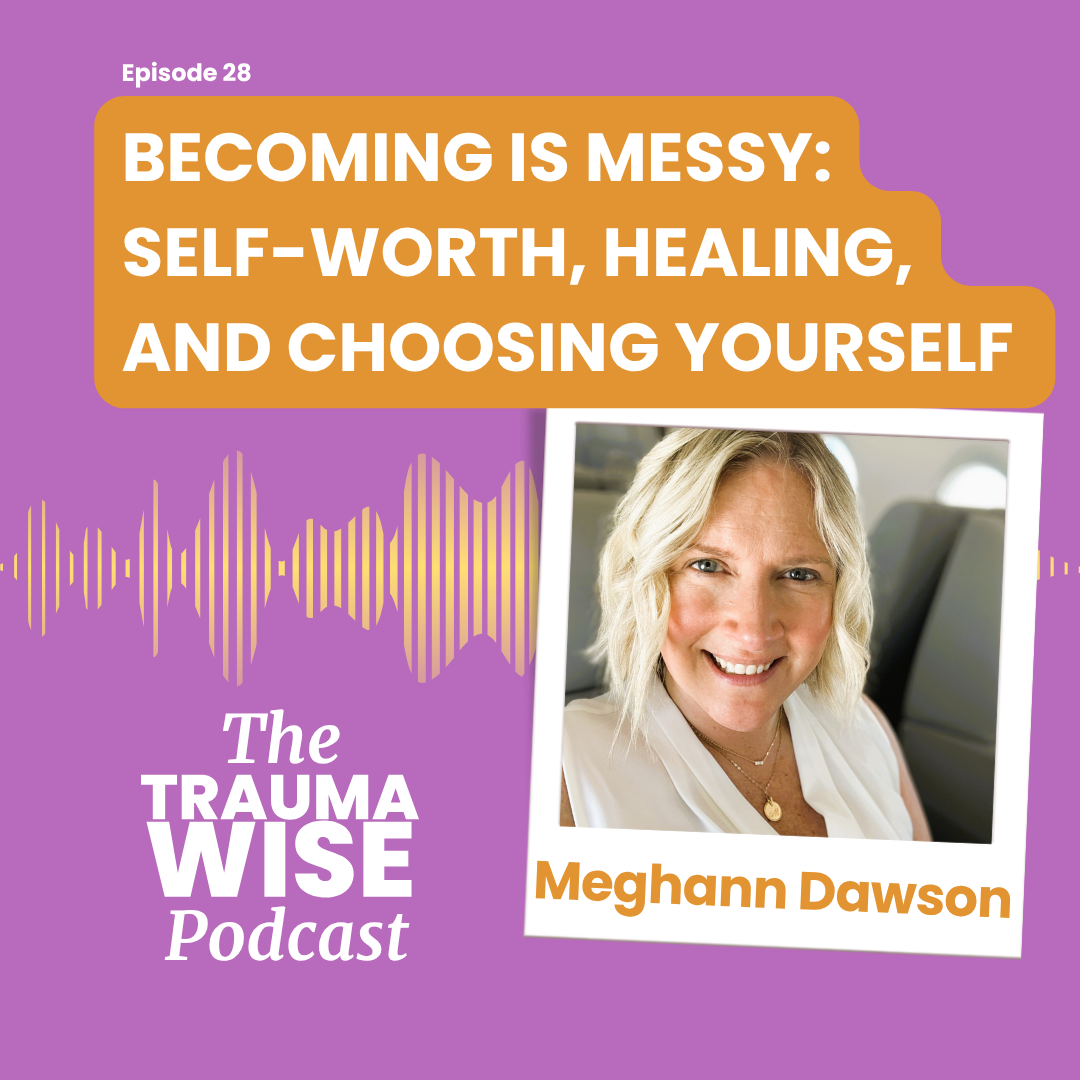
Meghann Dawson, a coach who writes and speaks about self-worth after chronic trauma, describes hearing that voice for the first time while holding her newborn daughter. Overwhelmed by love, she sensed clearly that something in her own life had to change.
If that voice is hard to hear right now, that’s okay. Stillness helps: a long shower, a walk, a few quiet minutes in the morning. The goal isn’t to force an answer. It’s to make enough space to recognize your own knowing when it arrives.
Telling the truth is terrifying, and healing
Keeping parts of our story hidden takes a great deal of energy. Telling the truth about them can feel like stepping off a ledge. What if the people we tell confirm our worst fears about ourselves?
Often, the opposite happens. When we share honestly with one safe person, they may respond with understanding, or with stories of their own. That moment of being fully known and still welcomed can loosen shame in a way years of private effort can’t.
You don’t have to tell everyone. You don’t have to tell anyone before you’re ready. But finding even one person who can hear your whole story without judgment is one of the most healing things you can do.
Safe people are anchors
Some people in our lives feel like anchors. With them, we can simply be who we are, without bracing or performing. With others, there’s a low hum of fear, and we can’t fully show up no matter how hard we try.
I’ve noticed in my own life that I can’t live in love and fear at the same time. When there’s fear in a relationship, I shrink. Part of that comes from my history. I was told, quite literally, to “get small quick.” That message, that all of me wasn’t welcome, takes time and many new experiences to unlearn.
This is also how we can support someone else who is struggling. Being a safe person rarely means offering advice or opinions. It means creating a space where someone can unload without being judged, and letting them know, “I’m here for you no matter what.” Listening without condemning is not the same as condoning. It’s recognizing that we aren’t walking in their shoes.
Self-worth is learned through experience
Being told you are loved doesn’t mean much until you’ve experienced being loved. Our nervous systems learn through repeated experience, not through information alone. That’s why self-worth isn’t a quote on a wall. It grows as we have real moments of being seen, valued, and cared for, and then slowly learn to offer that same care to ourselves.
For adults who didn’t receive steady care as children, this is learnable. In Meghann’s words, “Those of us that didn’t have it as kids, we do need to learn it. And we don’t need to punish ourselves when we don’t know it yet.”
Sometimes that learning looks surprisingly practical. You might make a list of the moments you feel most alive and begin giving yourself those experiences on purpose: moving your body, dressing in a way that feels like you, eating well, going dancing. These aren’t indulgences. They are ways of showing your nervous system that your aliveness doesn’t depend on someone else handing it to you.
Choosing relationship instead of needing it
There’s an important difference between independence and interdependence. We do need other people. Children, in particular, need consistent, loving caregivers to meet their needs. As adults, though, we can meet a good portion of our own needs, which changes how we show up in relationships.
When we’re no longer desperate for someone to fill a hole, we can choose to be with them. That choice is its own kind of commitment. A partnership, a friendship, or a working relationship that says, “I would be okay without you, and I’m choosing you anyway,” has a different kind of strength.
I learned the hard way that how we say this matters. Years ago, in a difficult conversation with a business partner, I said, “I don’t need you.” What I meant was that I was choosing to be there and not out of dependency. What he heard, given his own history, was rejection. It was a good reminder to take a breath before setting a boundary and to say the fuller truth: I’m choosing this relationship.
Estrangement, grief, and love from afar
Sometimes choosing ourselves means stepping back from family. This is one of the most painful decisions a person can make, and it is rarely made lightly.
I remember getting off a phone call with family members and feeling a flood of stress move across my scalp. I paused and thought, That should never happen. We shouldn’t have to brace our bodies against the people who are supposed to love us. I had been ignoring my body for a long time, trying to be the good daughter.
Distance from family doesn’t have to mean hatred. Meghann describes sending her father “love from afar,” wishing him well while accepting that a close, mutual relationship wasn’t possible. When he died, she grieved him with sadness but without regret.
Forgiveness can be part of this, but it may not look the way we were taught. In my view, forgiveness is expressed to another person when they’ve shown some remorse and want to repair. When they haven’t, forgiveness is something we offer inside ourselves, and with our higher power if that’s part of our faith, so the harm no longer has a hold on us. It’s about our own freedom, not about pretending nothing happened.
Becoming is not a straight line
Healing isn’t a checklist you complete once. New losses, new discoveries, and new seasons of life can bring old wounds back to the surface. That doesn’t mean you’ve failed or gone backward. Each new layer is an opportunity for deeper healing, built on everything you’ve already learned.
If something in you is pushing back right now against the idea that you’re unworthy, please listen to that part. The voice that says I am worthy, I am good, I belong is the true one. You don’t need to earn it. You get to come home to it.
Resources
- Episode: Becoming Is Messy: Healing Perfectionism and Building Safe Connection (with Meghann Dawson), with the full transcript, reflection questions, and a practice.
- Free guide: Nurturing Supportive Networks
This article is for education and reflection and is not therapy or clinical treatment. If you need support, please consider reaching out to a licensed mental health professional.
Subscribe Now!
Want to get an email when there are new announcements and articles on the TraumaWise site?


Add your first comment to this post