

Relational Trauma Without Shame: How Repair Builds Resilience (with Dr. Vicki Sanders)
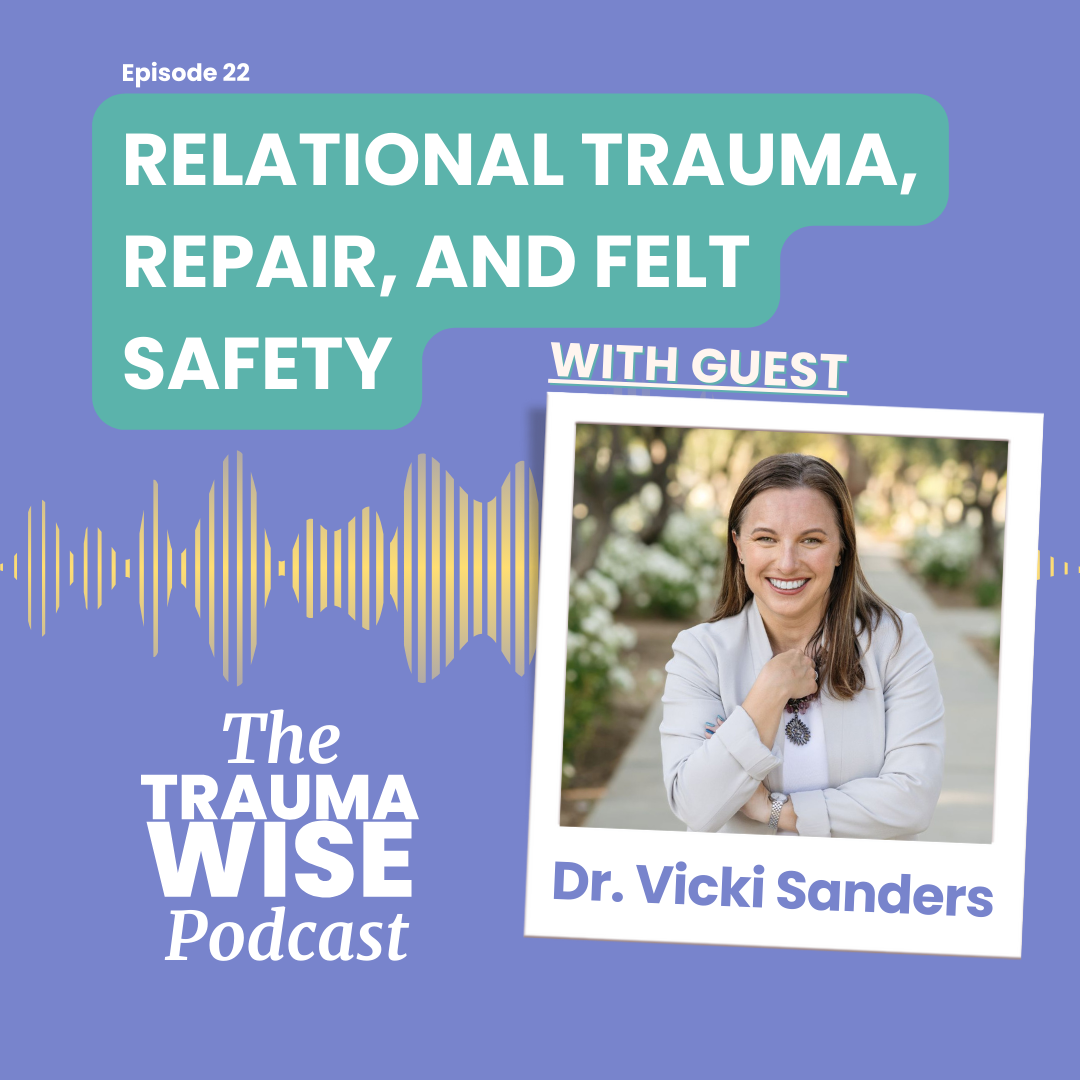
In today’s conversation, Renae Dupuis sits down with Dr. Vicki Sanders (LMFT, PhD in Psychology) to explore the kind of trauma we don’t always have language for, but many of us carry: relational trauma. Together, they unpack how rupture happens (even in loving families), why repair matters more than perfection, and how we can build felt safety through nervous-system-aware connection.
This episode is a grounding reminder: healing isn’t about blame — it’s about truth, compassion, and repair.
Meet Our Guest: Dr. Vicki Sanders
Dr. Vicki Sanders is a licensed marriage and family therapist with a PhD in psychology. Her work focuses on relational trauma in children and families, particularly within foster care and adoption. But as she shares in this episode, the more she works with foster and adoptive systems, the more she recognizes something important:
Relational disruption may look “bigger” in some contexts, but it exists across the general population too — often in quieter, more socially normalized forms. And those smaller moments can still be deeply impactful.
A No-Shame Approach to Relational Disruption
Early in the conversation, Renae names something essential: this is not an episode about blaming parents or caregivers.
It’s not “my parents screwed me up, so this is who I am.”
Instead, it’s an invitation to look honestly at how our relationships shaped us — and how we can choose to grow from that without shame.
Dr. Vicki offers a powerful reframe: many caregivers are doing the best they can with the information they have. Even so, emotional injuries can still happen — and they matter.
“Our job is not to blame or shame. Our job is to know better and then do better.”
One of the most relieving truths here is that rupture isn’t a sign you’ve failed. It’s part of being human.
What matters is whether we can name it, tend it, and repair it.
Rupture, Repair, and Telling the Truth
Renae and Dr. Vicki go deep on a key trauma-informed principle:
Safety isn’t built by pretending rupture didn’t happen. Safety is built by telling the truth.
When caregivers deny reality (“That didn’t happen.” “You’re overreacting.” “You’re too sensitive.”), it creates cognitive dissonance and confusion — the kind of confusion that teaches a nervous system it cannot trust what it sees or feels.
Dr. Vicki shares that one of her approaches is gentle-but-direct reflection — helping people notice patterns that don’t quite add up, without shaming them.
Sometimes the best therapeutic intervention is simply naming the moment clearly enough that the nervous system can exhale and say:
“Oh… I’m not crazy. That really was hard.”
Fear Responses in Relationships: Fight, Flight, Freeze (and Why It Matters)
One of the most practical parts of this episode is how Dr. Vicki explains fear responses in everyday life.
A major insight:
Your brain often reacts the same way to emotional threats as it does to physical threats.
That’s why relationship conflict can feel so intense. In the body, disconnection can register as danger.
Dr. Vicki walks through common fear reactions:
-
Fight: escalating conflict, harshness, power struggles
-
Flight: avoiding the relationship, leaving emotionally or physically
-
Freeze: shutting down, dissociating, going silent
When relationships are built on fear, it becomes harder to find (or trust) safe connection — and more disruptions follow.
Why Emotional Harm Gets Minimized (And the Cost of That)
Renae brings up something many caregivers, educators, and advocates have felt:
Systems often recognize physical harm more easily than emotional harm.
In reporting systems, treatment plans, and institutional paperwork, the questions tend to focus on observable marks or behavioral symptoms. Emotional terror, psychological injury, and relational instability often don’t “count” the same way — even when they shape a person’s life for decades.
Dr. Vicki speaks candidly about the way insurance systems require diagnosis-based billing:
To get care covered, someone must be identified as “the problem,” assigned a disorder, and treated as an individual unit — even when what’s actually happening is systemic.
A family system.
A school system.
A community system.
A survival system.
This is one of the places where TraumaWise’s Northstar rings loudly: stories can seed systemic change when we stop pretending harm is only real if it’s measurable on paper.
The Heart of Healing: You Can Only Heal Relational Trauma Through Relationship
This moment in the conversation is a cornerstone:
“You can only heal relational trauma through relationship.”
Dr. Vicki credits Dr. Karen Purvis for this truth, and it lands with clarity:
If your nervous system was dysregulated in relationship, it will be regulated again in relationship.
That relationship might be:
-
a therapist
-
a trusted friend
-
a support group
-
a mentor
-
a faith community
-
a consistent caregiver
But the healing does not happen in isolation.
This isn’t about “fixing yourself” alone.
It’s about finding safe-enough connection where your body learns, over time:
“I don’t have to do this by myself anymore.”
Practical Tools: Repair Without Therapy Access
Not everyone can access therapy. Dr. Vicki offers tools that are accessible, honest, and effective — even if they take time.
1) Post-Conflict Reflection (When Calm)
She recommends journaling with simple questions:
-
What happened?
-
What was I happy about in that interaction?
-
What was I unhappy about?
-
What did I want to happen?
-
What came out of it?
-
How would I have felt at that age?
-
How would I feel if my spouse said that to me?
Reflection helps us see patterns we can’t see in the moment — and gives our nervous system language for what happened.
2) Community Connection
Healing needs witness. Even one safe relationship can begin shifting shame into belonging.
Validation matters:
“Yeah… that really was hard.”
From there, repair becomes possible.
Regulate First, Then Repair: The Basics That Matter
Before repair can happen, the nervous system needs stabilization.
Dr. Vicki’s grounding list:
-
Breath
-
Water
-
Food
-
Rest / Time
And Renae emphasizes a truth we love because it’s always accessible:
Even if you can’t get to food, water, or rest — you can always get to breath.
A simple breath rhythm they mention:
-
Inhale for 4
-
Exhale for 6
Even one minute, repeated daily, teaches the body:
“I’m safe enough right now.”
You don’t have to do it perfectly.
You just have to practice.
A Compassionate Closing: There Will Be More Chances to Repair
This episode ends with hope — not the fragile kind, but the kind built on reality:
You will mess up.
You will have rupture.
You will miss the moment sometimes.
And you will also have more chances to repair.
The goal isn’t perfection. The goal is to create a relational world where mistakes can be named, repaired, and transformed into deeper connection.
About TraumaWise
TraumaWise equips change agents to transform broken systems by activating trauma-informed communities — grounded in felt safety, connection, and co-regulation.
If this episode resonated with you, you’re not alone — and you’re exactly why this podcast exists.
Gentle Disclaimer
This episode is for educational purposes and is not therapy or clinical treatment. If you need support, please reach out to a licensed mental health professional.
Connect with Dr. Vicki Sanders
Website: https://www.drvickisanders.com/
Keep the Conversation Going
If this episode spoke to you:
-
Subscribe to the TraumaWise Podcast
-
Share it with someone you love (or someone who leads)
Together, we can make shift happen.


0 comments